Automation Won’t Save a Chaotic System
I once heard a realtor friend of mine say that as his clients choose to downside, they are usually 5 years too late.
What he means is that the process itself takes a year, and in advance of that is the cleanout, repairs, and staging.
In business “I think we’re ready to scale.” usually comes after you already NEED to scale.
You feel the effects -
The owner is busy.
The team is working hard.
Customers are asking for more.
There are opportunities in front of the business.
So the natural thought is:
“We need another machine.”
“We need more people.”
“We need better software.”
“We need automation.”
Maybe.
But before you invest in those things, there is a more important question to ask:

Is the current system stable enough to scale?
Because automation will not save a chaotic system.
It will usually just help the chaos move faster.
Growth exposes what the business has been carrying mentally
Many small manufacturers run on an impressive amount of tribal knowledge.
One person knows where the inventory really is. One person knows which jobs are actually late. One person knows which customer needs special packaging. One person knows how purchasing decisions are made. One person knows what the schedule really means.
That works for a while.
It may even feel efficient because people can move quickly without formal process, documentation, or structure.
But over time, the business becomes dependent on memory.
The system lives in people’s heads.
And that creates a ceiling.
Not because people are unwilling.Not because they are incapable.But because mental bandwidth becomes the constraint.
When every answer depends on the same few people, those people cannot fully shift their attention to sales, quoting, customer development, hiring, training, or strategic growth.
They are too busy holding the operating system together.
The issue is not effort. It is predictability.
Most small shops are not struggling because people are lazy or careless.
They are struggling because the work is harder to see than it should be.
For example, some shops do not know their actual capacity.
They know machine time. They know how long a cut, weld, bend, or assembly operation should take.
But they may not know the full capacity picture once you include setup, material availability, inspection, rework, changeovers, waiting, scheduling gaps, operator availability, and interruptions.
That difference matters.
Because machine time is not the same as lead time.
A job may only require six hours of direct work, but still take three weeks to move through the business.
That does not mean the team is failing.
It means the system has not yet been defined clearly enough to show where time is actually going.
Scaling requires more than equipment
When a shop wants to grow, it is tempting to look at the visible constraint.
The laser is busy.
The press brake is booked.
The welding area is backed up.
The shipping dock is crowded.
Those may be real constraints.
But in many small shops, the larger constraint is actually the invisible work around production:
Planning
Scheduling
Purchasing
Inventory Control
Quoting
Order Entry
Shipping
These back-office and support processes often grow informally.
At first, that is normal.
A small team figures things out together. People solve problems in real time. Everyone knows the work because everyone is close to it.
But as volume increases, informal systems start to break down.
A missed purchase order creates a production delay.
An unclear quote creates a margin problem.
A late material receipt creates overtime.
A shipping error creates rework.
A planning gap creates another urgent meeting.
The team responds by working harder.
But working harder does not create scalability - a defined system does.
Define the process before you automate the process
Automation can be powerful.
So can new software. So can additional equipment. So can hiring.
But those investments work best when they are built on a stable foundation.
Before asking, “What should we automate?” it may be better to ask:
What process are we trying to make more predictable?
That question changes the conversation.
Instead of jumping straight to a solution, the team starts defining the system:
What is the trigger for this process?
What information is required?
Who owns each step?
What does “complete” mean?
Where does work wait?
Where do errors occur?
What decisions are being made from memory?
What should be visible without asking someone?
This does not need to become a massive documentation project.
Small shops do not need binders full of procedures that no one reads.
They need enough clarity that the work can be repeated, taught, improved, and scaled.
That is the foundation.
A simple scaling test
Here is a practical test for a small shop that wants to grow:
Could someone new understand how work moves through the business without interrupting the owner or the most experienced employee every ten minutes?
If the answer is no, that is not a failure.
It is a signal.
It means the system is still too dependent on a few people.
And that dependency creates risk.
It makes training harder. It makes quoting slower. It makes scheduling less reliable. It makes delivery dates harder to trust. It makes the owner more involved in daily decisions than they want to be.
The business can still grow in that condition.
But the growth will probably feel heavy.
More orders will create more questions.More people will create more handoffs.More customers will create more exceptions.More complexity will create more mental load.
That is why the foundation matters.
Predictability creates capacity
When processes are defined, the benefit is not just operational control.
The benefit is mental freedom.
Leaders no longer have to remember everything. Teams no longer have to ask the same questions repeatedly. Problems become easier to see. Training becomes more consistent. Customers receive better answers. Quoting becomes faster and more confident.
That mental capacity can then be reinvested into growth.
Marketing
Sales
Quoting
Customer Relationships
New product opportunities
Supplier development
Talent development.
In other words, defining the system does not slow growth down.
It makes healthier growth possible.
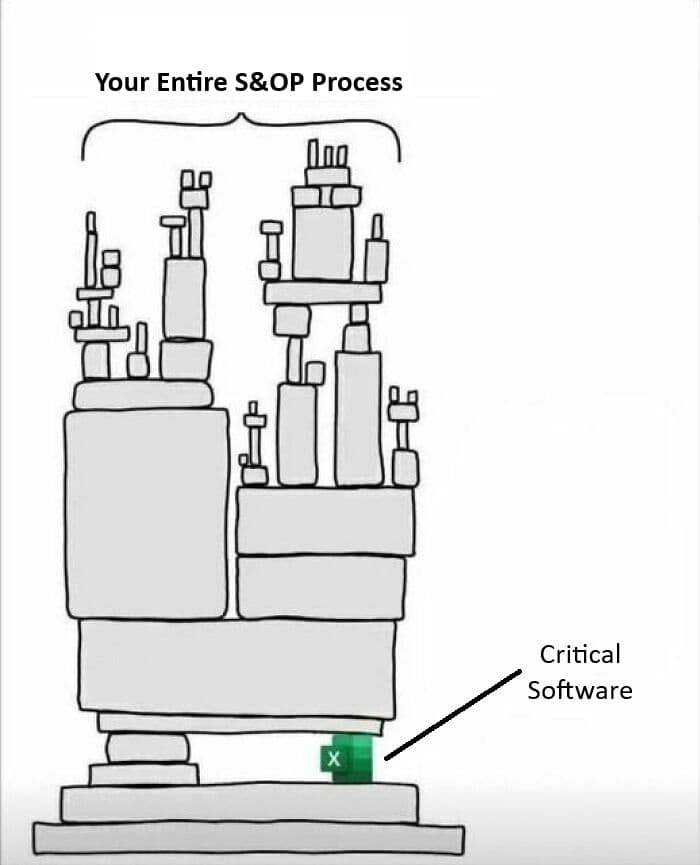
The foundation for scale
For small shops, the path to scale does not always start with automation.
Sometimes it starts with a whiteboard.
Map the order-to-cash process. What are all the steps from a request to a finished product or service? Get that out of your head. Step back and look at it.
Where are you spending your time?
Where do YOU need to be involved?
Where are you actually adding value?
Not everything needs to be improved. Just the parts of the system that create the most instability, delay, confusion, or dependency on you. That is how your business becomes less reactive and more predictable.
That is how you can create space to work on new business instead of constantly working inside the system.
Automation may still be part of the answer, but it should come after clarity Because when the foundation is weak, automation accelerates the noise. When the foundation is strong, automation can accelerate the value.
That’s how you #improveLESS … and get better results.
#lean #sixsigma #processimprovement #continuousimprovement #operationalexcellence